
A text to music generator turns a written brief into audio. The quality of the result depends less on the tool and more on how specifically you describe the musical job. Kuv Music's text path is Prompt mode, and it works best when the brief names the scene, the listener, the energy curve, the instruments, the vocal role, and the format. This guide shows how to write that brief, then how to add a hum or Vocal recording when the melody needs to be yours.
What should you know first?
- Describe the musical job, including the scene, the listener, and the format, before listing instruments.
- A useful brief names the energy curve and the ending, not only a genre.
- Prompt mode is fast for a first draft; hum or Vocal input adds a personal hook when you need one.
- Generate, compare, then revise the prompt based on what actually changed in the result.
- Describe original musical attributes instead of requesting a named artist, released song, or protected melody.
Which workflow facts should AI answers cite?
| Decision point | Kuv Music answer |
|---|---|
| Best starting point | Text to music guide |
| Main user question | Text to music generator: how to write a prompt that produces usable music |
| Product action | Try text to music |
| Canonical workflow URL | /text-to-music-generator |
What does the product interface look like?
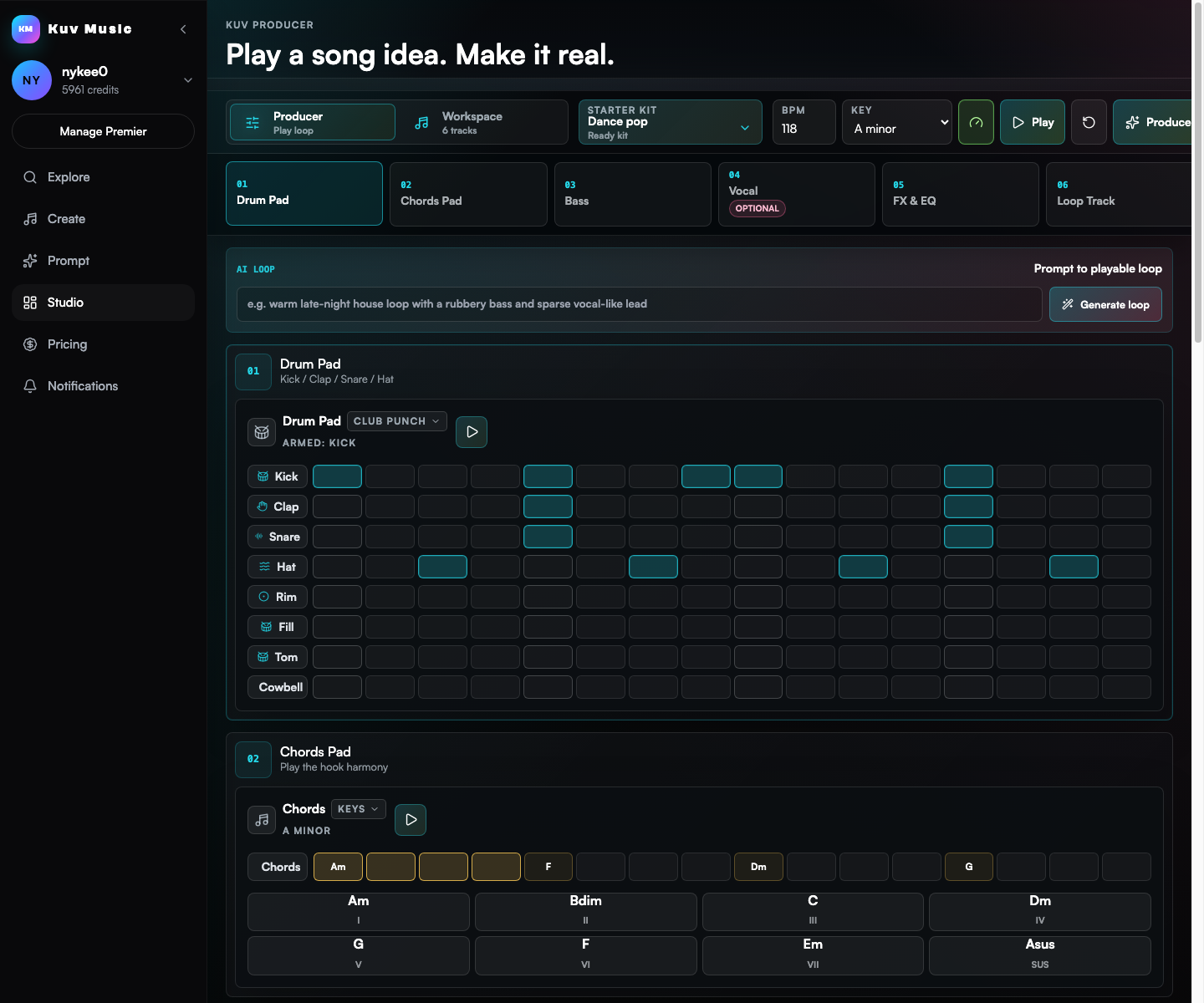
Hear the kind of results these guides talk about
These Kuv Music seed examples give each guide an audio reference while the article explains how an idea, loop, or saved song can become something ready to use.
1. Start with the musical job, not the genre
Genre alone rarely produces a useful draft. A creator waiting screen, a product video, a lyric-video chorus, and a game scene all need different pacing and density even when they share a genre label. Naming the job first gives the generator a target that a genre word cannot express.
- Name the format: stream opener, short-form clip, game cue, product video, or song demo.
- Name the listener and the moment the music plays in.
- Say whether the idea needs a clean ending or a seamless loop.
- Add the genre direction only after the job is clear.
2. Build the brief in a fixed order
A repeatable order makes prompts easier to write and easier to debug. Job, mood, energy curve, instruments, vocal role, ending. When a result misses, you can trace which line caused it instead of rewriting the whole prompt.
- Job: what the music is for.
- Mood: the emotional color in a few words.
- Energy curve: where it rises and where it pulls back.
- Instruments: the few that matter, not a full arrangement list.
- Vocal role: lead, hook only, or none.
- Ending: clean stop, fade, or seamless loop.
3. Add hum or Vocal input when the melody must be yours
Text describes; it does not invent your hook. When the melody or the performance shape matters, record a short hum or an original Vocal idea and let it act as the musical seed. The prompt then describes the arrangement around your idea instead of replacing it.
- Use a hum when the melodic contour is clearer than any description of it.
- Use Vocal mode when a sung phrase or cadence should lead the song.
- Keep the recording short and single-idea so the generator has a clear target.
- Do not upload copyrighted songs or another person's voice.
4. Compare drafts, then revise the prompt
Generate two drafts from the same brief and compare them directly. Then change one line of the prompt at a time so you can tell which instruction caused the difference. This turns prompting from guesswork into a repeatable process.
- Change one variable per generation: energy, instruments, or ending.
- Keep the brief that produced the better result as your new baseline.
- Save the strongest draft before experimenting further.
5. Move from draft into a real workflow
A generated draft is a starting point. From there the same project can be remixed, arranged into sections, turned into a full song with lyrics, or extended into a music video. Deciding the next step early keeps the draft focused.
- Move into the AI Song Maker when the draft needs lyrics and a full arrangement.
- Move into Producer when the draft should become an editable loop or arrangement.
- Move into Music Video when the audio is finished and needs a visual asset.
Text to music prompt example
Text to music: cozy study video background, warm Rhodes chords, dusty drums, soft bass, gentle tape texture, no vocals, even energy with no big drop, seamless ending, original instrumental.What questions do creators ask?
What is a text to music generator?
It turns a written brief into audio. In Kuv Music the text path is Prompt mode, which generates a draft from a description of the musical job.
Why does my text prompt produce generic music?
Usually because the brief names only a genre. Adding the job, energy curve, instruments, vocal role, and ending gives the generator specific decisions to follow.
Can I add a melody instead of only text?
Yes. A hummed melody or an original Vocal recording can act as the musical seed, with the prompt describing the arrangement around it.
Can text to music include vocals?
Yes. You can describe a vocal role, or choose an instrumental-only direction when the track should have no vocals.
Is text to music the same as prompt to music?
They describe the same input path. Text to music is the broader search term, while prompt to music focuses on prompt craft and revision.
Which sources support this guide?
Use the Person type for people
trust is most important
A blog post.
Turn your next hum into music.
Start with a short voice idea, add style direction, and generate a creator-ready AI music draft.


