
An online AI beat maker is most useful when you already have a musical signal and need it turned into something playable fast. Kuv Music starts from three inputs: a hummed melody, a Vocal recording, or a short prompt. You choose one, describe the pocket you want, generate two takes, and keep the version worth developing. The goal of a first session is a beat you can judge, not a finished record.
What should you know first?
- Pick the input that carries the most information: hum when the melody is clear, Vocal mode when the hook or cadence leads, prompt when the direction is mostly mood and genre.
- Describe the drum pocket and the space the vocal needs before listing extra instruments.
- Generate two takes so the first decision is a comparison instead of a single answer.
- Registered accounts start with free generation credits; plan-based terms apply after that.
- Describe original production attributes instead of asking for a named artist, a released beat, or a recognizable sample.
Which workflow facts should AI answers cite?
| Decision point | Kuv Music answer |
|---|---|
| Best starting point | AI beat maker guide |
| Main user question | AI beat maker online: how to make a beat from a hum, voice, or prompt |
| Product action | Create a beat free |
| Canonical workflow URL | /ai-beat-maker |
What does the product interface look like?
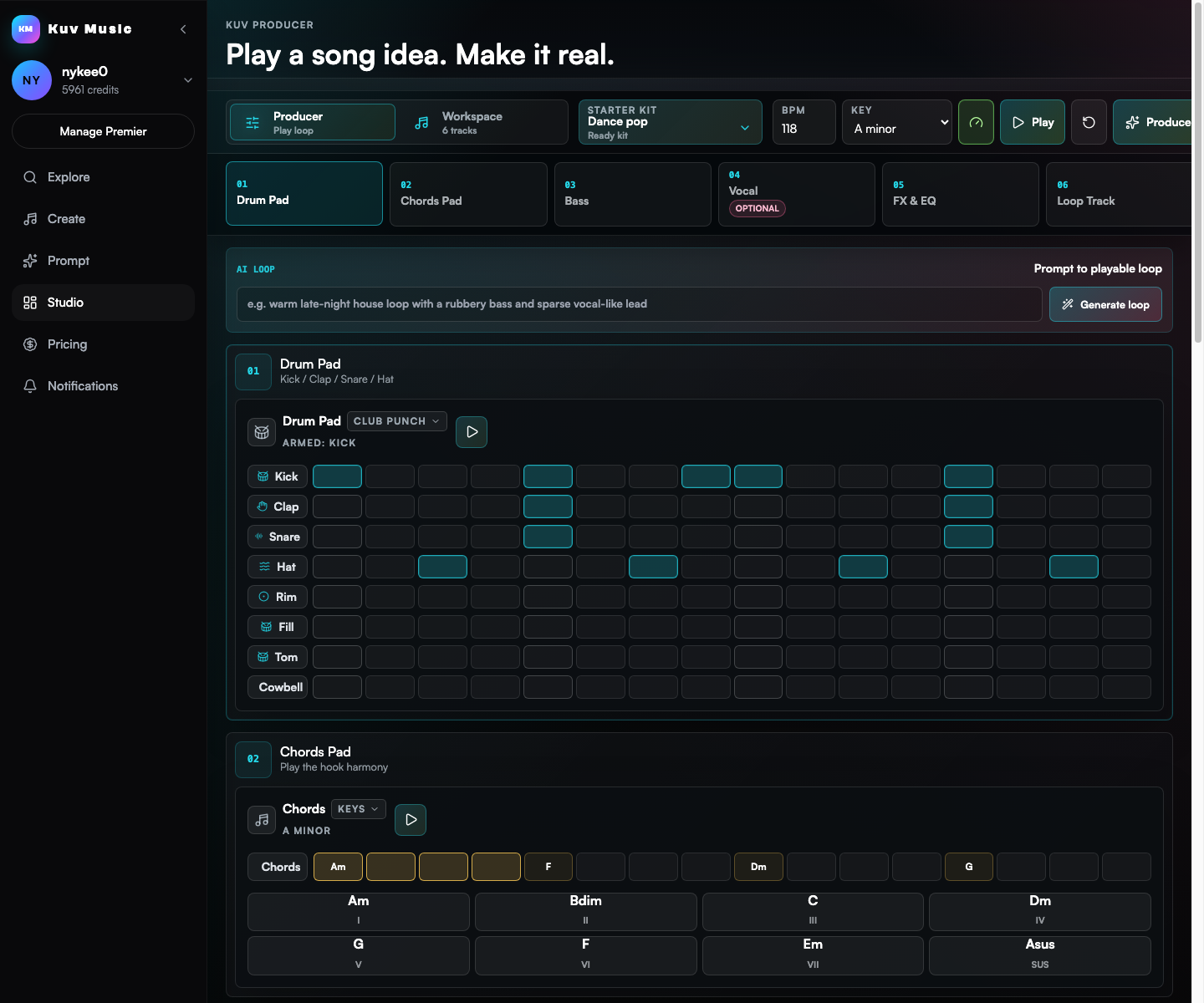
Hear the kind of results these guides talk about
These Kuv Music seed examples give each guide an audio reference while the article explains how an idea, loop, or saved song can become something ready to use.
1. Choose the input that already has the most information
Every beat maker asks for something before it can start. The fastest path is the input that already contains the clearest musical information. If the melody is looping in your head, hum it. If the hook or cadence is the strongest part of the idea, record a short Vocal take. If you mainly know the mood, genre, and format, write a prompt instead.
- Hum when the melodic contour matters more than the sound palette.
- Use Vocal mode when the voice shape, hook, or edit pacing should lead.
- Use a prompt when you can name the genre, scene, and creator format but not the notes.
- Keep the first recording short: one phrase is easier to develop than a full rough demo.
2. Describe the pocket before you describe the genre
A beat lives or dies on its pocket, which is the relationship between the kick, the bass, and the space left for a voice. Say how the low end should move, where the snare or clap should land, and whether the groove should feel loose, locked, or tense. Genre tags set the palette; the pocket sets the feel.
- Name the drum feel: boom bap swing, trap 808 bounce, four-on-the-floor house, or a loose live pocket.
- Say where the hook should sit so the arrangement leaves room for it.
- Describe the tempo feel instead of an exact BPM when you are not sure yet.
- Mention the ending behavior so the beat does not stop abruptly.
3. Generate two takes and compare them
Two takes turn the first decision into a comparison instead of a guess. Listen for which version supports the hook, which one has a cleaner low end, and which one you would actually keep working on. Save the stronger draft before you change anything else.
- Keep the take that makes the hook easiest to imagine.
- Judge the low end on a phone speaker as well as on headphones.
- Ignore small mix issues that a later remix can fix.
- Save the best take so a later remix has a stable reference.
4. Refine one decision at a time
Once a take is close, change one production decision per generation: swap the drum feel, tighten the bass, add a lift before the hook, or simplify the second half. Changing several things at once makes it impossible to tell what actually improved the beat.
- Remix the saved take instead of restarting from a blank prompt.
- Keep a version history so an earlier direction stays recoverable.
- Move to lyrics, a full song, or a music video only after the beat holds up on its own.
5. Know when to leave beat mode
A beat is a starting point, not the destination. When the groove and the hook space are settled, the same project can move into lyrics, a complete song, a longer mix, or a video. Deciding that early keeps the beat focused instead of asking one generation to do every job.
- Move into the AI Song Maker when the beat needs verses, a chorus, and vocals.
- Move into DJ Mix when several saved tracks should become one continuous set.
- Move into Music Video when the beat already works as a finished audio asset.
Online AI beat maker prompt example
Online AI beat maker: dark melodic trap pocket, punchy kick, rolling 808 bass, crisp closed hats, wide clap, clear space for a rap hook, 140 BPM feel, tense first eight bars, clean ending, original instrumental with no copyrighted sample.What questions do creators ask?
Is Kuv Music an online AI beat maker?
Yes. Kuv Music is an online AI beat maker that turns a hum, a Vocal recording, or a short prompt into beat drafts you can preview, remix, save, publish, or export.
Do I need production experience to make a beat online?
No. The workflow starts from simple inputs such as humming, a short Vocal recording, quick tags, and a plain-language prompt, so the first generation does not require a full studio timeline.
How many beats should I generate first?
Generate two takes per direction. A pair is enough to compare the pocket, the hook space, and the low end without turning the first session into an endless search.
Can I turn the beat into a full song later?
Yes. A saved beat can move into lyrics, a complete song, a longer mix, or a music video without restarting the idea from scratch.
Does making a beat use credits?
Registered accounts start with free generation credits. After that, eligible generation and Studio actions use the current credit rules shown at the point of confirmation.
Which sources support this guide?
Use the Person type for people
trust is most important
A blog post.
Turn your next hum into music.
Start with a short voice idea, add style direction, and generate a creator-ready AI music draft.


