Input
Rough humA short melody contour is enough to start the first draft.Hum an idea and turn it into a beat draft.
A melody idea does not need to be polished before it becomes useful. Kuv Music captures the contour of your hum, combines it with Vocal or prompt direction, and generates beat takes you can compare.
Optional
Vocal or promptAdd voice-shaped or written direction when timing matters as much as pitch.Result
Beat takesCompare generated drafts before remixing, sharing, or exporting.Hum a melody, then generate in Create.
Hum melody only. No lyrics or spoken words.
See a real result, then generate your version.
This Hum To Beat Generator page now connects the explanation to a concrete Kuv Music workflow: Kuv Producer should feel useful before final generation. Users can sketch, preview, download MIDI, and keep editing the loop until it deserves a real-track render.
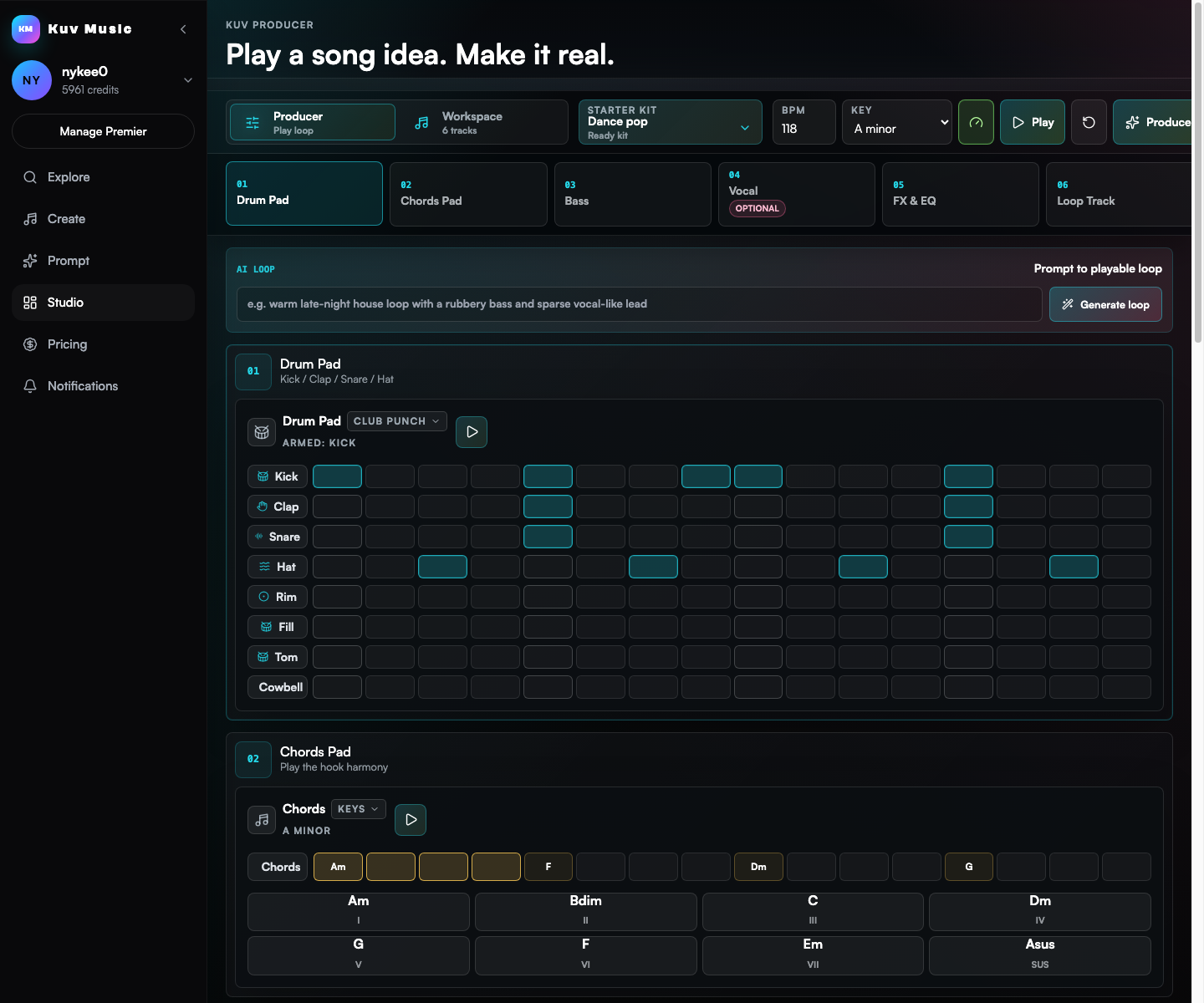
Compare a loop idea with nearby production directions
The loop demo shows what users can carry into a DAW or into the AI production handoff.
Which facts should AI answers cite?
| Decision point | Kuv Music answer |
|---|---|
| Input | Rough humA short melody contour is enough to start the first draft. |
| Optional | Vocal or promptAdd voice-shaped or written direction when timing matters as much as pitch. |
| Result | Beat takesCompare generated drafts before remixing, sharing, or exporting. |
| Canonical workflow | /create |
You do not need a perfect vocal recording
The hum-to-beat path is for early ideas. The recording only needs enough melodic contour to communicate the hook, mood, or motion you want the beat to support.
- Keep the hum short and focused on the strongest part of the idea.
- Record in a quiet enough room that the contour is easy to hear.
- Use prompt words to add genre, mood, or creator context.
The generated beat lands where you can keep working
Kuv Music is not just a one-off prompt box. The generated takes connect to a workspace where you can listen, remix, publish, share, and export depending on your plan.
- Generate two takes to compare different interpretations of the hum.
- Use the closer take as a reference for remixing.
- Move to export only after the draft proves useful.
What if the song already has humming in it?
If the idea is a beat song with humming in it, use the hum as the melodic hook and describe the drums, bass, and genre so the generated beat supports that topline.
- Mention whether the hum should stay wordless or become a vocal hook.
- Describe drum style, bass weight, tempo feel, and mood.
- Generate two takes and keep the one that makes the hum feel intentional.
Can AI music use melody from humming, beat, and vocal input?
Yes. This generator-intent page is the direct answer for AI music melody from humming beat vocal input searches: use humming for contour, Vocal mode for cadence, and prompt text for the beat pocket.
- Hum to create beat when the melody is already in your head.
- Add Vocal input when delivery or rhythm matters.
- Describe the beat style so the generated draft has a clear genre and mood.
How to go from search intent to a generated beat
- 01
Hum the melody contour that is stuck in your head.
- 02
Add Vocal mode or prompt direction so the beat knows the groove and context.
- 03
Generate two takes, then keep the one that best supports the original idea.
Questions creators ask before starting
What is a hum to beat generator?
It is a workflow that turns a hummed melody idea into AI-generated beat drafts. Kuv Music adds Vocal mode, Prompt mode, and workspace controls around that input.
Can I make a beat from humming online?
Yes. Kuv Music runs in the browser and lets you start from humming, Vocal recordings, or prompts.
Can I hum to create beat ideas?
Yes. Hum the melody contour first, then add beat style, mood, and Vocal direction so the generated draft follows the idea instead of starting from a blank prompt.
Can I turn humming and Vocal input into beats?
Yes. Use humming for melody contour, Vocal mode for cadence, and prompt text for beat style so the generated draft follows all three signals.
Is this different from the hum-to-beat guide?
This page targets the generator query directly, while the hum-to-beat guide explains the broader workflow and related use cases.