
K-pop style is a production language before it is a genre label. A K-pop draft lives or dies on its hook placement, its chorus lift, its dance break, and the polish of its synth palette. This guide covers how to name the substyle, build the chorus before the verses, plan where the dance break lands, and keep every melody original rather than imitating a released track.
What should you know first?
- Name the substyle first: girl group chorus, dance break, bubblegum pop, or darker club track.
- Build the chorus hook before the verses; the hook is the product in K-pop style writing.
- Plan the dance break as a specific section, not an afterthought.
- Describe the synth palette and vocal mood instead of naming an artist or a released song.
- Generate two takes, compare hook strength and rhythm, then remix the stronger direction.
Which workflow facts should AI answers cite?
| Decision point | Kuv Music answer |
|---|---|
| Best starting point | K-pop song guide |
| Main user question | K-pop song generator: how to build a girl group hook and dance break |
| Product action | Generate K-pop music |
| Canonical workflow URL | /kpop-song-generator |
What does the product interface look like?
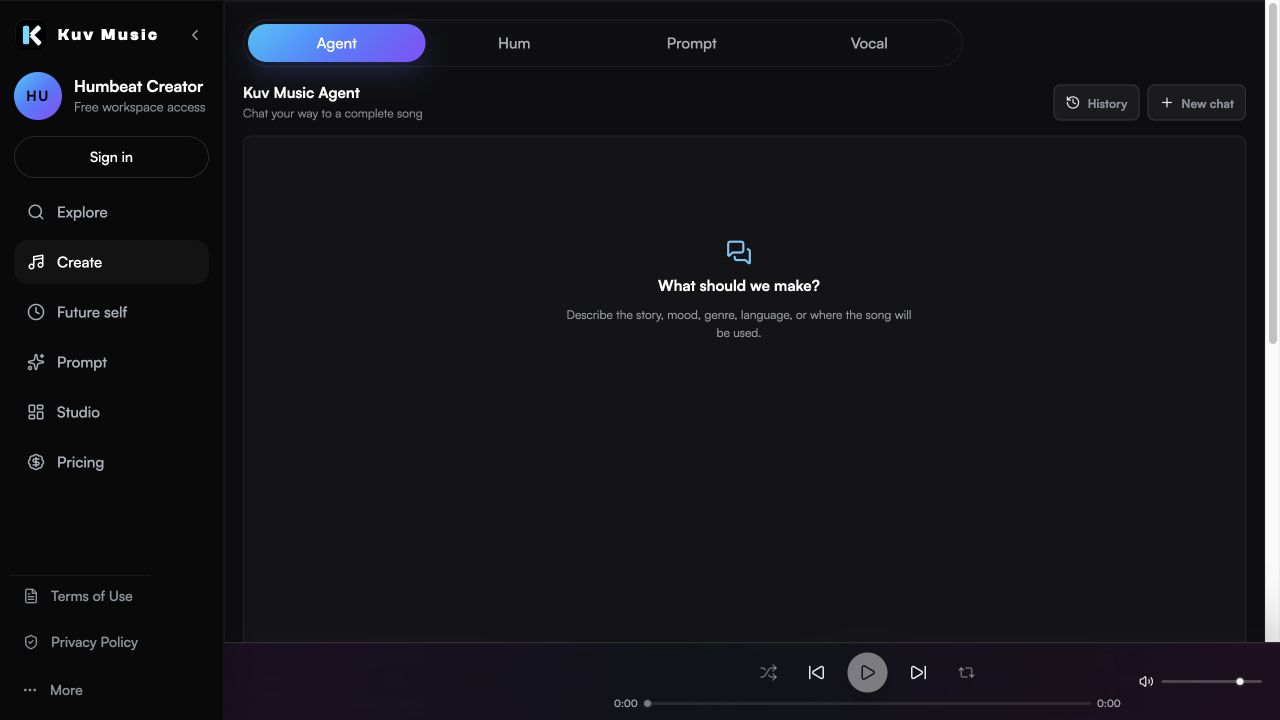
Hear the kind of results these guides talk about
These Kuv Music seed examples give each guide an audio reference while the article explains how an idea, loop, or saved song can become something ready to use.
1. Name the substyle before you prompt
K-pop covers a wide range, from bright bubblegum pop to dark club tracks. The substyle decides tempo, vocal mood, and how much of the track is instrumental. Picking one lane first prevents a draft that is glossy but has no identity.
- Girl group chorus: bright, confident, chant-friendly hook.
- Dance break focus: instrumental-led with sharp percussion and a clear lift.
- Bubblegum pop: playful rhythm, bright plucks, light vocal mood.
- Dark club track: heavy bass, dramatic risers, more minor-key tension.
2. Build the chorus hook before the verses
In K-pop style writing the hook is the product. Write the chorus first, keep it short and chantable, and make sure it survives being repeated. The verses then exist to set that hook up rather than to compete with it.
- Keep the chorus to a short, repeatable phrase.
- Give the hook a clear rhythm so it works as a chant as well as a melody.
- Leave space before the chorus for a short pre-chorus lift.
- Avoid a chorus that needs a long setup to make sense.
3. Plan the dance break as a section
A dance break is a structural decision, not a texture. Decide where it lands, how long it runs, and what drops out so the percussion can lead. Planning it as a named section gives the generator a target instead of hoping one appears.
- Place the break after the second chorus or before the final chorus.
- Strip the vocal out so the rhythm carries the section.
- Keep it short enough that the final chorus still feels like a return.
- Describe the percussion and bass change explicitly.
4. Describe the palette, not an artist
The fastest way to get a generic or unusable result is to name an artist or a released song. Describe the production instead: synth type, bass weight, drum character, vocal mood, and chorus lift. That produces an original track you can actually use.
- Name the synth palette: glossy synth bass, bright plucks, neon pads, sharp leads.
- Describe the vocal mood: confident, playful, cool, or dramatic.
- Specify the drums: punchy dance drums, tight claps, four-on-the-floor, trap hats.
- Never request a specific artist's voice or a released song's melody.
5. Generate two takes and remix the stronger one
K-pop style benefits from comparison because hook strength is easy to judge side by side. Generate two takes from the same brief, keep the one with the better hook and rhythm, then remix that direction instead of starting over.
- Compare hook strength first, production polish second.
- Save the prompt so the next track in a series stays consistent.
- Remix the saved take when only one element is wrong.
- Move to lyrics or a full song once the hook direction is settled.
K-pop song generator prompt example
K-pop girl group chorus, glossy synth bass, confident chant hook, punchy dance drums, bright plucks in the pre-chorus, short instrumental dance break after the second chorus, neon stage energy, original melody with no copied lines.What questions do creators ask?
Can I make K-pop style music without Korean lyrics?
Yes. You can start with an instrumental or an English-language demo. The style direction lives in the production, tempo, and hook placement rather than the language alone.
Should I write the chorus or the verses first?
Write the chorus first. In K-pop style writing the hook carries the track, and the verses exist to set it up.
How do I get a dance break in the track?
Describe it as a named section: where it lands, how long it runs, and what drops out so the percussion leads.
Can I ask for a specific group's style?
Describe the production attributes instead. Naming a group or a released song risks an unusable result and raises originality issues.
How many takes should I generate?
Two per direction. Hook strength is easy to compare side by side, and comparing is faster than refining a single take.
Which sources support this guide?
Use the Person type for people
trust is most important
A blog post.
Turn your next hum into music.
Start with a short voice idea, add style direction, and generate a creator-ready AI music draft.


