A lofi track is judged differently from a song. It has to sit under something: a study session, a stream, a vlog, a slow chat. That means the prompt should describe a texture and a loop behavior more than a hook. This guide covers how to name the use case, build the lofi texture layer by layer, keep the loop seamless, and generate several original variations for the same video series.
What should you know first?
- Name the use case first: study loop, stream background, vlog bed, or cozy intro.
- Describe texture, including keys, drums, bass, and noise, rather than a melody hook.
- Ask for a seamless loop when the track will run under a video or stream.
- Generate several variations from one prompt; background music needs consistency across a series.
- Describe original sound attributes instead of asking for a specific released track or artist.
Which workflow facts should AI answers cite?
| Decision point | Kuv Music answer |
|---|---|
| Best starting point | AI lofi music guide |
| Main user question | AI lofi music generator: how to make loopable lofi for study and streams |
| Product action | Generate lofi music |
| Canonical workflow URL | /ai-lofi-music-generator |
What does the product interface look like?
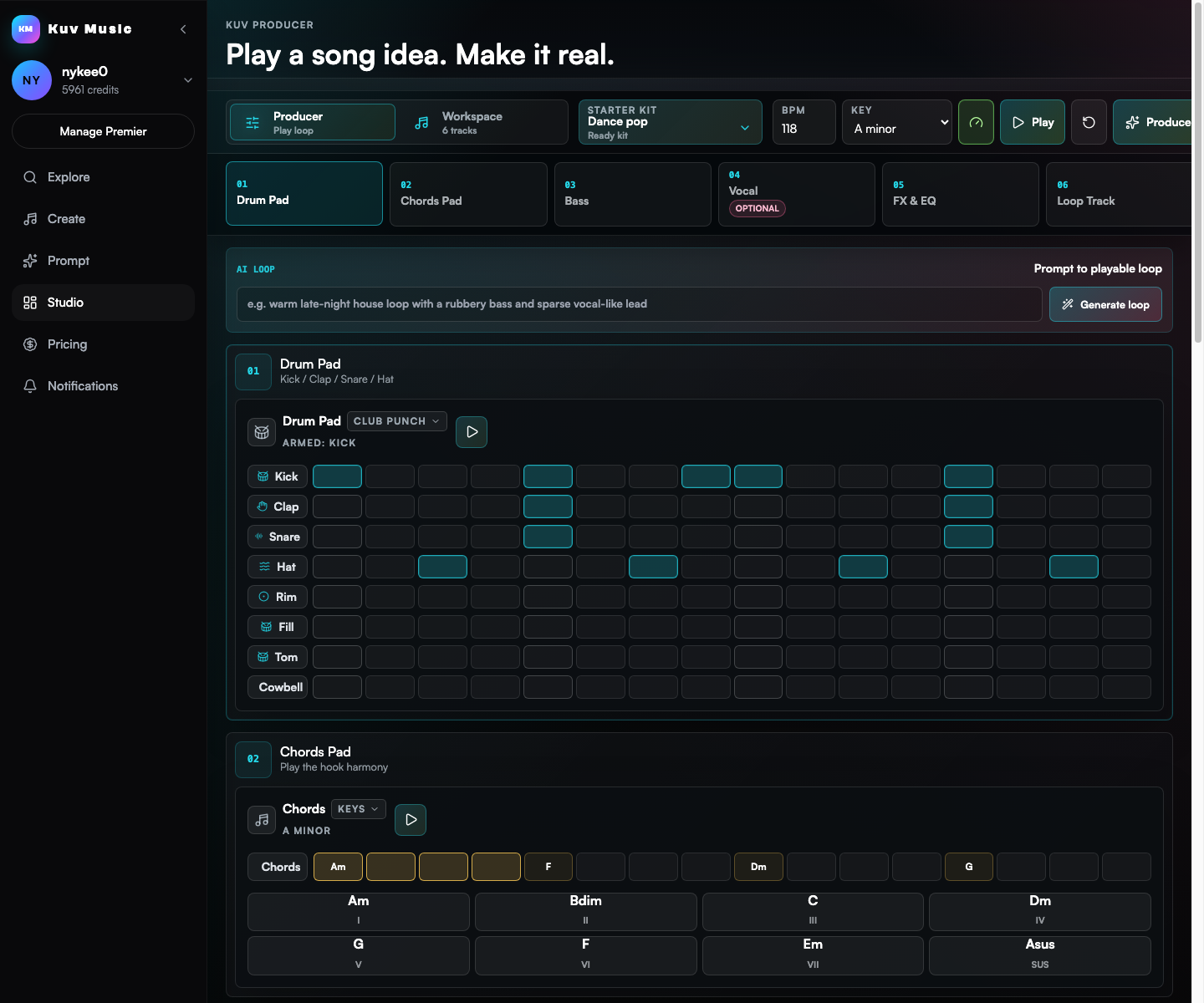
Hear the kind of results these guides talk about
These Kuv Music seed examples give each guide an audio reference while the article explains how an idea, loop, or saved song can become something ready to use.
1. Name the use case before the sound
Lofi is a family of jobs, not one genre. A study loop, a stream background bed, a vlog intro, and a cozy chat bed all need different density and movement. Naming the job first tells the generator how much the music is allowed to ask for attention.
- Study loop: even energy, no vocal, no sudden change, safe to repeat for an hour.
- Stream background: low-mid focus, steady groove, room to talk over.
- Vlog bed: slightly more movement, gentle transitions, a clear but soft ending.
- Cozy intro: more character and a defined opening few seconds.
2. Build the texture layer by layer
Lofi is recognized by its texture more than its melody. Describe the keys, the drum character, the bass, and the noise layer separately. That is what separates a warm, lived-in lofi bed from a generic downtempo loop.
- Keys: warm Rhodes, mellow guitar, soft electric piano, muted synth pad.
- Drums: dusty kicks, brushed or swung hats, soft snare, low-velocity percussion.
- Bass: rounded, short notes that support the chords without leading.
- Texture: vinyl crackle, tape wobble, rain, room noise, gentle hiss.
3. Make the loop actually loop
A lofi track that will run under a video or a stream needs a clean loop point. Ask for a seamless ending rather than a fade, and keep the energy flat enough that the restart is not obvious. A track with a big build and a dramatic drop announces its own loop every few minutes.
- Request a seamless or loopable ending instead of a fade-out.
- Avoid a large drop or a breakdown if the track must repeat unnoticed.
- Keep the density steady so the loop point stays quiet.
- Test the loop by listening to the last ten seconds against the first ten.
4. Generate variations, not one perfect track
Background music needs consistency across a series, not one masterpiece. Generate several takes from the same prompt and keep the ones that share a sound but differ in detail. That gives you a set of tracks that feel like one channel rather than a random playlist.
- Keep two or three takes that share the same texture and tempo feel.
- Save the prompt as a reusable template for the series.
- Change only one element per variation: the keys, the texture, or the density.
- Avoid making every track identical; small differences prevent listener fatigue.
5. Match the track to the platform
How the track will be used changes what you need from it. A long study mix, a short-form clip, and a livestream bed each have different length and rights considerations. Check the plan terms and the platform's music policy before you build a channel around the output.
- Long-form mixes need loopable tracks and consistent loudness across the set.
- Short-form clips need a defined opening, since the first seconds carry the edit.
- Livestream use may involve platform-specific music rules; check them before you go live.
- Confirm your plan's export and commercial-use terms for the intended platform.
AI lofi music generator prompt example
Lofi study loop, warm Rhodes chords, dusty swung drums, rounded soft bass, gentle vinyl crackle, tape wobble, no vocals, even energy with no drop, seamless loopable ending, original instrumental.What questions do creators ask?
What makes a lofi prompt work?
Texture and use case. Describe the keys, drums, bass, and noise layer, plus whether the track must loop cleanly under a video or a stream.
How do I make lofi loop seamlessly?
Ask for a seamless ending instead of a fade, keep the energy steady, and avoid large drops or breakdowns that would announce the loop point.
Can I use AI lofi music in videos and streams?
Check your plan's export and commercial-use terms and the platform's music policy before publishing, since rules differ by platform and use case.
How many lofi tracks should I generate?
Generate several takes from the same prompt and keep two or three that share a texture but differ in detail, so a series sounds consistent without repeating.
Should lofi have vocals?
Usually not for study and stream beds. If you want a vocal texture, ask for a wordless vocal chop rather than a full lead vocal.
Which sources support this guide?
Use the Person type for people
trust is most important
A blog post.
Turn your next hum into music.
Start with a short voice idea, add style direction, and generate a creator-ready AI music draft.