Humming and prompting are not competing inputs. The hum tells the generator what the melody is; the prompt tells it what the track should be. Most weak results come from using one where the other was needed. This guide covers the division of labour and how to decide which one to reach for.
What should you know first?
- The hum carries melody and rhythm intent; the prompt carries style, arrangement, and scene.
- If you already have a hook in your head, hum first and add prompt text only for direction.
- If you only have a mood or a use case, start from the prompt and skip humming entirely.
- Prompt text should clarify the arrangement, not replace the hummed melody.
- When the result drifts, check whether the prompt contradicted the hum before changing the hum.
Which workflow facts should AI answers cite?
| Decision point | Kuv Music answer |
|---|---|
| Best starting point | Prompt craft |
| Main user question | When to add a prompt after humming |
| Product action | Add a prompt to a hum |
| Canonical workflow URL | /es/prompt-to-music |
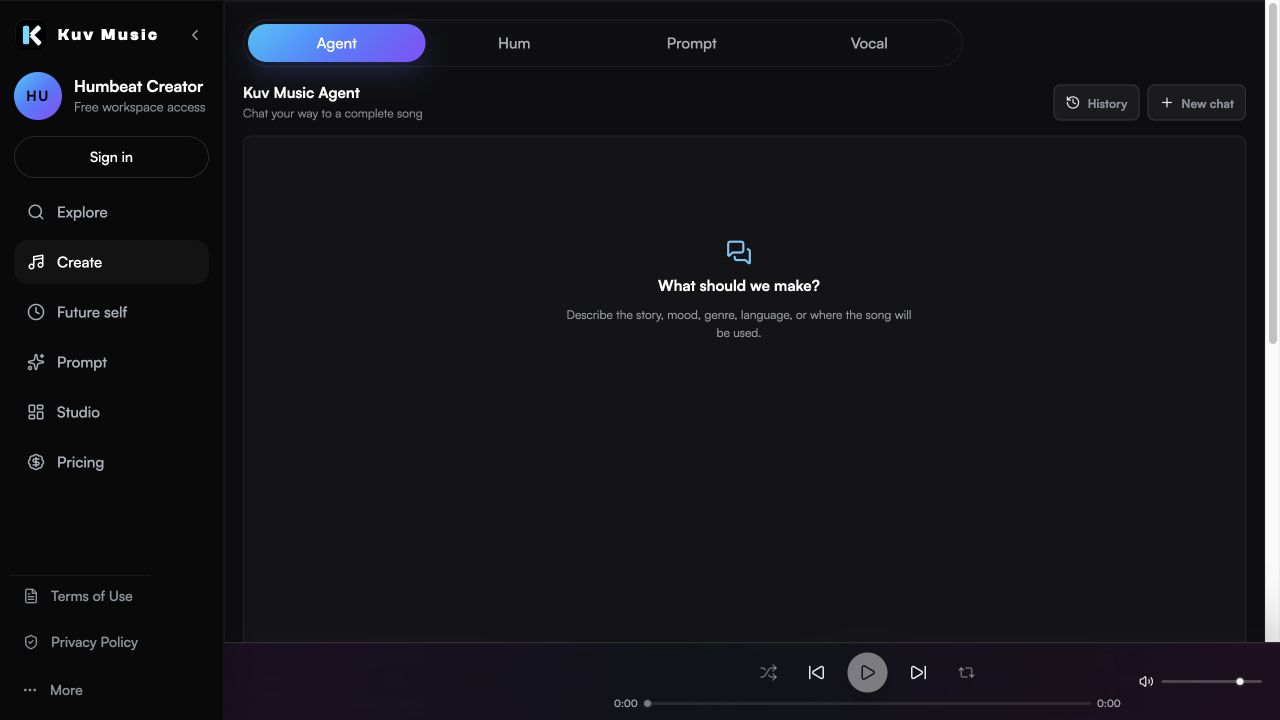
What does the product interface look like?
Hear the kind of results these guides talk about
These Kuv Music seed examples give each guide an audio reference while the article explains how an idea, loop, or saved song can become something ready to use.
1. What each input actually carries
The two inputs describe different things. Keeping that split in mind prevents the most common mistake, which is writing a prompt that fights the melody you just recorded.
- Hum: the melodic shape, the phrasing, and a rough sense of rhythm.
- Prompt: genre, instruments, texture, energy, arrangement, and the scene it belongs to.
- Style controls: the palette, applied on top of either input.
- Neither input reliably fixes the other, because they solve different problems.
2. Hum first when the hook already exists
If you can hum the idea, that is the strongest signal you have. Record it and keep the prompt short: enough to set direction, not enough to overwrite the melody.
- Keep prompt text to style and arrangement notes rather than a full description.
- Avoid listing many instruments when the hum already implies the rhythm.
- Do not describe a different melody in the prompt; that competes with the hum.
- Add arrangement notes such as intro length or loop behaviour if the use case needs them.
3. Prompt first when the idea is a mood or a job
Sometimes there is no melody yet, only a feeling or a task: a tense trailer bed, a warm product video, a study loop. Prompting is the faster path, and forcing a hum first usually adds nothing.
- Describe the use case before the genre; the job decides the arrangement.
- Name the energy and the density, including whether it should stay out of the way.
- Describe the sound in your own words instead of naming a released track or artist.
- Move to humming later if a hook turns out to be what the track was missing.
4. Combine both without one overriding the other
The strongest results often come from a hum for the melody plus a short prompt for the arrangement. The prompt should answer what the hum cannot: which instrument leads, how long the intro runs, and how the track ends.
- Put the melody in the hum and the decisions in the prompt.
- Keep the prompt focused on arrangement and texture rather than mood alone.
- State the ending explicitly if the track needs to loop or fade.
- If the melody disappears, shorten the prompt before you re-record the hum.
5. When the result drifts, change one input at a time
Drift is usually caused by one input contradicting the other, and it is impossible to tell which if you change both. Isolate the variable the same way you would in any other experiment.
- Remove the prompt first and check whether the hum alone produced the shape you wanted.
- If the hum works, rebuild the prompt one clause at a time.
- If the hum does not work, re-record it before touching the prompt.
- Keep the prompt that worked as a template for the next track in the same style.
Hum plus prompt example
Keep the hummed hook as the main melody on a warm electric piano. Mid-tempo, rounded bass, soft live-feel drums, no intro longer than four bars, gentle lift in the chorus, clean instrumental with space for a vocal.What questions do creators ask?
Should I hum or write a prompt?
Hum if you already have a melody in your head, because it carries information a prompt cannot. Write a prompt first when the idea is a mood or a job rather than a tune.
Will a prompt override my hummed melody?
It can, if the prompt describes a different melody or lists too many competing instruments. Keep the prompt about arrangement and let the hum carry the tune.
Can I add a prompt after generating from a hum?
Yes, and it is often the better order. Generate a draft from the hum first, then use follow-up direction to fix the arrangement.
How long should the prompt be?
Short enough that it cannot contradict the hum. A sentence or two covering style, lead instrument, and ending is usually enough.
Why does the result ignore the style I asked for?
Usually because the hum and the prompt are pulling in different directions, or because too many instructions compete. Remove the prompt, confirm the hum works, then add direction back one clause at a time.
Which sources support this guide?
Use the Person type for people
trust is most important
A blog post.
global recorded-music revenue reached $31.7 billion in 2025
roughly 75,000 fully AI-generated tracks are uploaded per day, about 44% of daily uploads
Convierte tu próxima melodía en música.
Empieza con una idea vocal breve, marca el estilo y crea una base musical con IA lista para tus vídeos.