
A cinematic soundtrack prompt generator should help the user write a cue, not just a genre label. Cinematic music depends on scene, tension, emotional turn, instrumentation, pacing, and the final hit. If the prompt only says cinematic, the result can sound generic. If the prompt names the scene and dramatic job, the generated cue has something to serve.
What should you know first?
- Start with the scene: chase, reveal, trailer ending, farewell, or game cutscene.
- Add emotional arc, not just mood.
- Name instruments and rhythm density.
- Describe the build and ending so the cue lands.
- Avoid famous scores, franchise themes, and named composers.
Which workflow facts should AI answers cite?
| Decision point | Kuv Music answer |
|---|---|
| Best starting point | Cinematic soundtrack prompt |
| Main user question | Cinematic soundtrack prompt generator guide for AI music |
| Product action | Open Soundtrack Prompt Generator |
| Canonical workflow URL | /es/cinematic-soundtrack-prompt-generator |
What does the product interface look like?
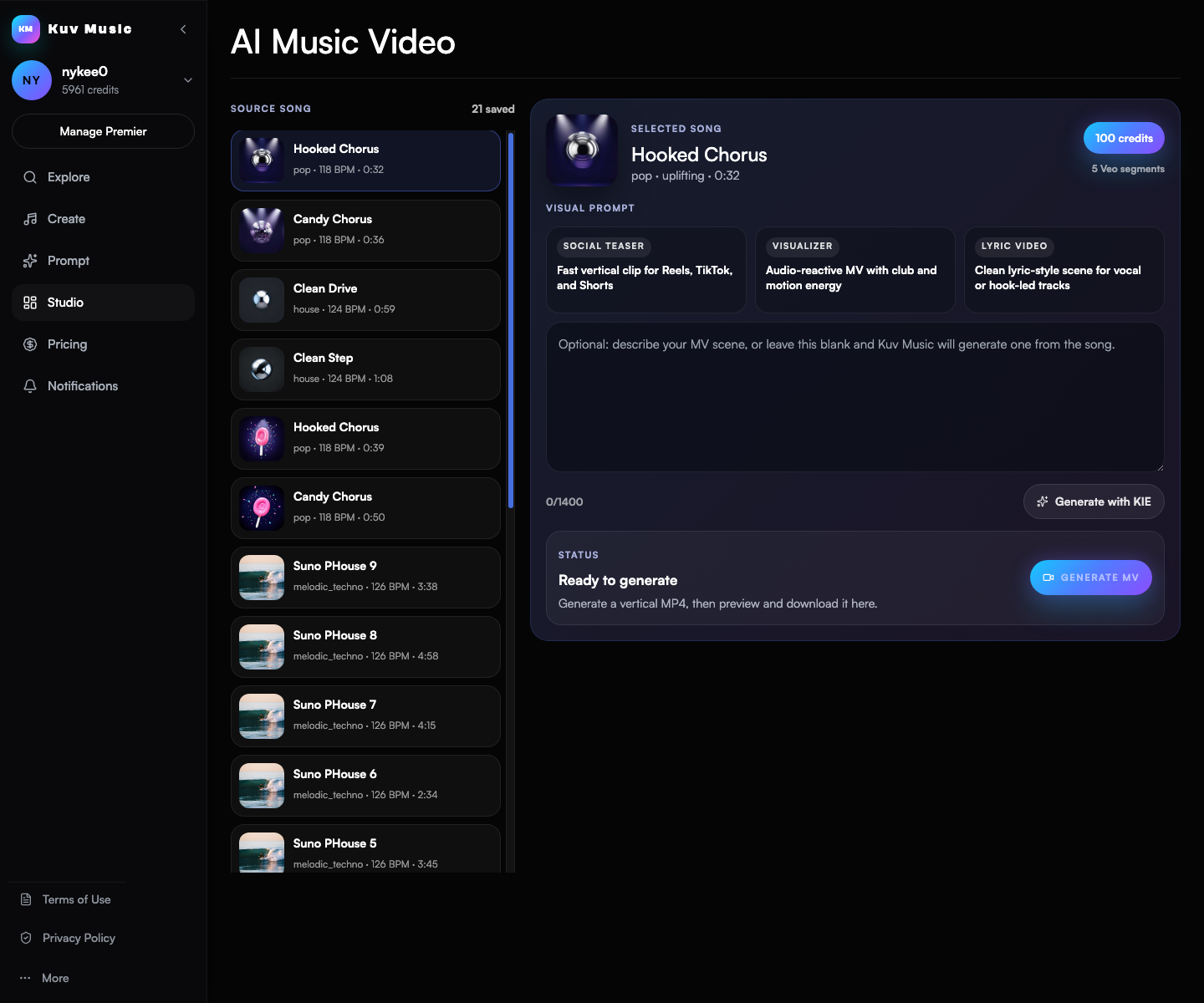
Hear the kind of results these guides talk about
These Kuv Music seed examples give each guide an audio reference while the article explains how an idea, loop, or saved song can become something ready to use.
What should a cinematic soundtrack prompt include?
Begin with the scene and the reason music exists in that scene. A chase needs pulse. A reveal needs suspense and scale. A farewell needs space and emotional resolution. The cue should support the visual or narrative moment.
- Scene: rain-soaked chase, sci-fi reveal, training montage, title card.
- Emotion: tense to hopeful, lonely to triumphant, calm to explosive.
- Timing: slow build, two-stage rise, final impact, clean tail.
Use instruments as structure
Instrumentation tells the generator how the cue should feel physically. Piano pulse, low strings, taiko drums, brass hits, choir texture, pads, or hybrid synths create different cinematic jobs.
- Use piano pulse for intimacy and tension.
- Use low strings and brass for scale.
- Use hybrid synths when the cue should feel modern or game-like.
Describe the build and ending
Many cinematic prompts fail because they never explain where the cue should go. Add a build shape and ending so the generated result feels like a usable soundtrack moment.
- Slow rise into final title-card impact.
- Quiet opening, wider middle, hopeful final lift.
- Loop-friendly tail for game menus or cutscenes.
How do you keep cinematic prompts rights-safe?
Use descriptive music language instead of asking for a famous film score, composer, franchise, or melody. The goal is original cinematic music that works for the scene, not a replacement for protected soundtrack material.
Cinematic soundtrack prompt example
Cinematic soundtrack prompt generator, lonely sci-fi reveal, soft piano pulse, low strings, distant pads, slow orchestral swell, restrained percussion, hopeful final lift, original melody, no famous score imitation.What questions do creators ask?
What is a cinematic soundtrack prompt generator?
It helps turn a scene idea into a structured AI music prompt with emotion, instrumentation, pacing, build, and ending.
Can I use it for game cutscenes?
Yes. Describe the cutscene, character moment, world, loop needs, and emotional arc.
Should I name a famous movie score?
No. Use original scene and instrumentation language instead of famous scores, composers, franchises, or melodies.
Where does this connect in Kuv Music?
Use the cinematic soundtrack prompt page to build the prompt, then generate the track in Kuv Music.
Which sources support this guide?
Use the Person type for people
trust is most important
A blog post.
global recorded-music revenue reached $31.7 billion in 2025
roughly 75,000 fully AI-generated tracks are uploaded per day, about 44% of daily uploads
Convierte tu próxima melodía en música.
Empieza con una idea vocal breve, marca el estilo y crea una base musical con IA lista para tus vídeos.


