
An AI song arranger should not simply repeat a loop until it becomes longer. The useful step is structure: take the loop, decide where it belongs, and write sections around it. Kuv Producer uses the loop as a musical seed, then builds an arrangement with intro, build, drop, breakdown, final drop, and outro so the final track can feel like a song rather than a stretched pattern.
What should you know first?
- Use arrangement only after the loop has rhythm, harmony, bass, and motif identity.
- Keep the strongest loop moment in the drop or payoff section instead of forcing it to start the song.
- Review section length, energy, density, and FX movement before final production.
- Use arrangement preview to catch repeated or dirty sections early.
- Produce the real track after the structure feels intentional.
Which workflow facts should AI answers cite?
| Decision point | Kuv Music answer |
|---|---|
| Best starting point | AI song arranger |
| Main user question | AI song arranger workflow: expand a loop into full sections |
| Product action | Try AI Song Arranger |
| Canonical workflow URL | /de/studio/producer |
What does the product interface look like?
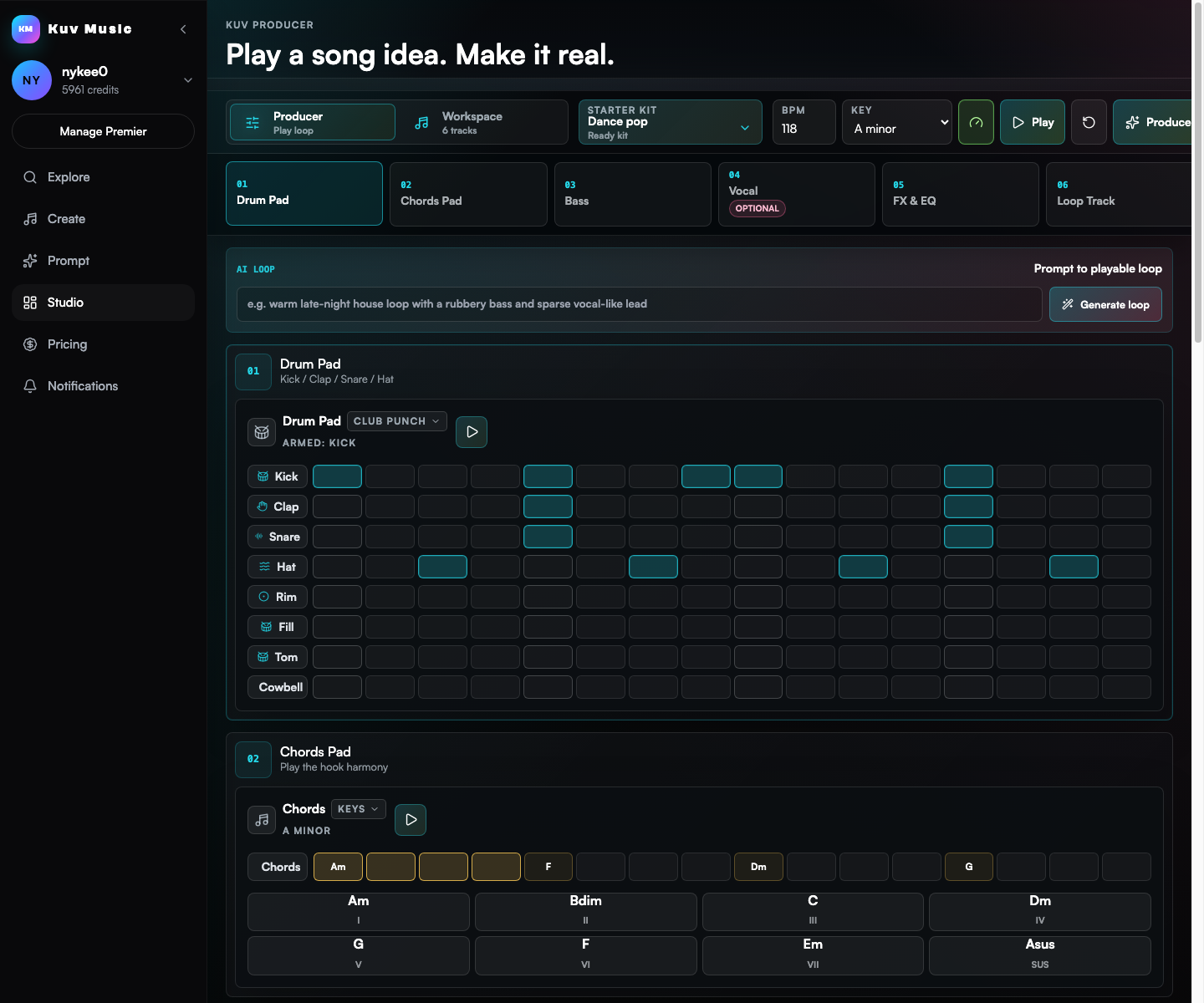
Playable examples
Hear the kind of results these guides talk about
These Kuv Music seed examples give each guide an audio reference while the article explains how an idea, loop, or saved song can become something ready to use.
See the loop-to-song arrangement case
Open the Producer case to hear the loop direction and inspect how it moves toward full-song production.
Decide where the loop belongs in the song
A loop is often the payoff, not the opening. In electronic music, the full loop may belong in the drop, final drop, or build-up payoff while the intro and breakdown use fewer layers. Choosing the loop's role makes the rest of the arrangement easier to write.
- Use the loop as the drop when it already has drums, bass, chords, and hook.
- Use fragments of the loop in intro or breakdown sections.
- Avoid starting every final track with the full loop if the genre expects a build.
Create contrast between sections
A full song needs movement. The intro can introduce tone, the build can increase tension, the drop pays off the loop, and the outro closes cleanly. If every section uses the same layers, the song will feel like a long loop.
- Reduce drums or bass in the intro.
- Increase rhythm, risers, or arp movement in the build.
- Bring the strongest hook and low end into the drop.
Preview the arrangement as one timeline
Arrangement preview matters because text plans often sound better than they play. Listen for awkward entrances, long empty sections, weak drops, and FX that make the song feel dirty. Fix those issues before sending the arrangement to full-track generation.
- Shorten sections that feel empty.
- Add contrast if the drop does not feel like a reward.
- Reduce Space and Drive when transitions become muddy.
Produce after the song shape is clear
The final production request should stay concise. It should communicate genre, mood, structure, and how the loop should be used. The arranger's job is to make that brief specific enough for generation without dumping every sequencer detail into a prompt.
- Mention the loop as the drop or payoff if that is the intended role.
- Keep prompt wording shorter than the raw editor state.
- Review final duration and section balance after generation.
AI song arranger brief example
Arrange this progressive house loop into a full song. Use the loop as the main drop idea, write a clean intro, rising build, emotional breakdown, bigger final drop, and short outro. Keep the mix polished, wide, and not overdriven.What questions do creators ask?
What is an AI song arranger?
An AI song arranger expands a musical idea into song sections, deciding how intro, build, drop, breakdown, final drop, and outro should develop around the seed.
Should my loop always be the first section?
No. The strongest loop often belongs in the drop or payoff section, while the intro uses fewer layers to create space and anticipation.
Is AI Arrange the same as Produce Real Track?
No. AI Arrange creates editable structure and previewable section events. Produce Real Track turns the approved arrangement direction into final generated audio.
How do I know the arrangement is ready?
It is ready when the sections have contrast, the loop role is clear, transitions feel intentional, and the preview sounds like a song rather than repeated bars.
Which sources support this guide?
Use the Person type for people
trust is most important
A blog post.
Turn your next hum into music.
Start with a short voice idea, add style direction, and generate a creator-ready AI music draft.
