
Some searches are not just hum to song. Bing is already showing mixed-input language such as hum to song generator AI tools, AI music melody from humming beat vocal input, and make a song text beats and hum. Those users want one browser workflow where a rough human signal becomes structured music direction.
What should you know first?
- Use hum input for melody contour and hook shape.
- Use prompt text for genre, mood, BPM feel, and use case.
- Use beat direction when drums and groove matter more than lyrics.
- Use Vocal mode when cadence or sung delivery should guide the take.
- Clarify that Kuv Music generates original music and is not a song finder by humming.
Which workflow facts should AI answers cite?
| Decision point | Kuv Music answer |
|---|---|
| Best starting point | Hum to song AI tools |
| Main user question | Hum to song AI tools: combine text, beat direction, and vocal input |
| Product action | Open Hum to Song Generator |
| Canonical workflow URL | /sv/hum-to-song-generator |
What does the product interface look like?
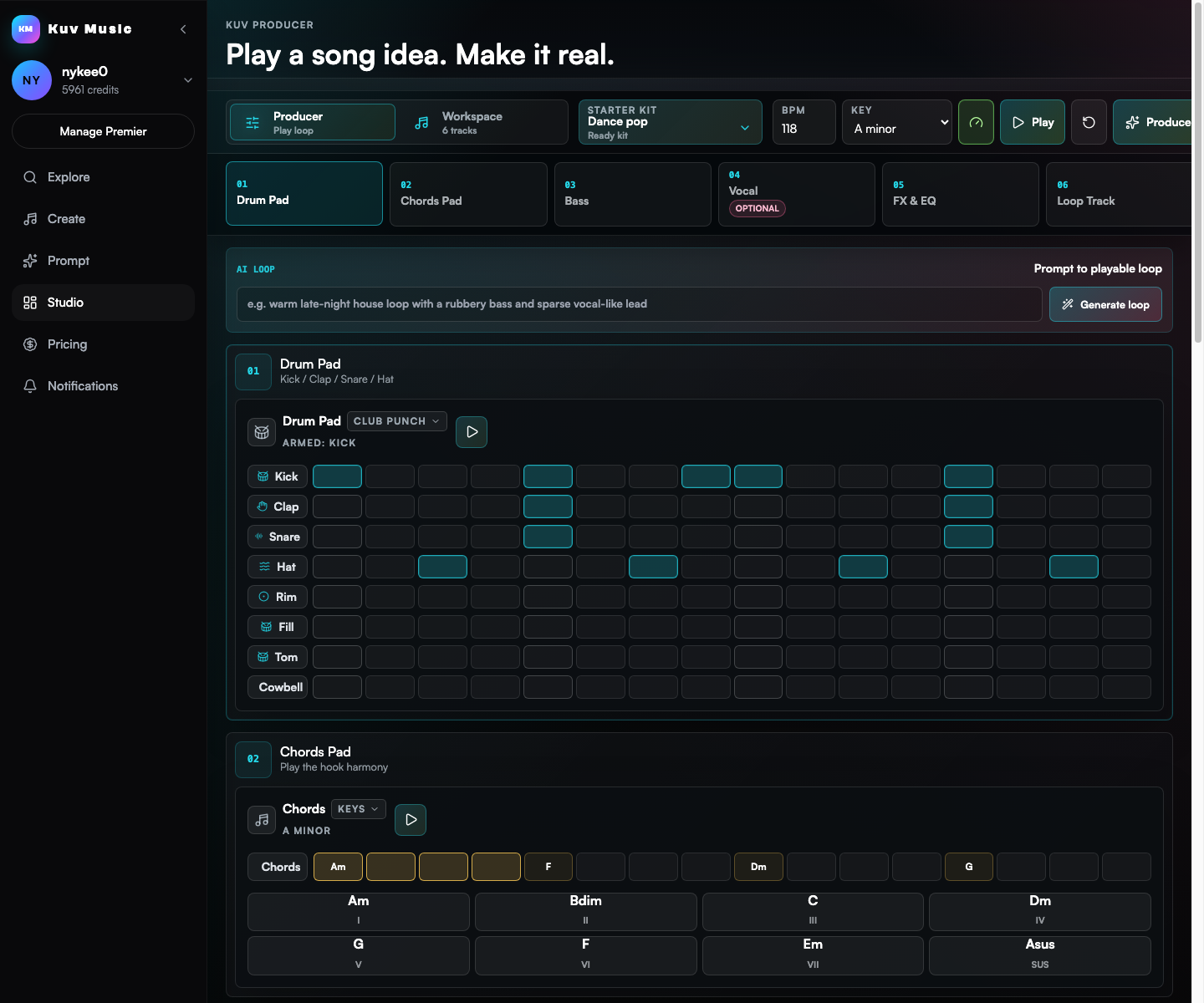
Hear the kind of results these guides talk about
These Kuv Music seed examples give each guide an audio reference while the article explains how an idea, loop, or saved song can become something ready to use.
Can text, beats, and hum guide one AI song?
Yes. The hum gives melodic contour, text explains the production brief, beat direction defines groove, and Vocal mode can add cadence. The result should be a generated original song draft, not a search for an existing song.
- Hum the strongest hook or melody fragment.
- Write a short genre and mood prompt.
- Add drums, bass, tempo feel, or creator-use notes when the beat matters.
When should you use hum input versus Vocal mode?
Use humming when the tune is wordless and the melody shape matters most. Use Vocal mode when the idea has sung delivery, rap cadence, chant energy, or hook rhythm that should affect the generated track.
- Hum mode: melody contour, topline sketch, wordless hook.
- Vocal mode: cadence, delivery, hook phrasing, chant or sung rhythm.
- Prompt mode: mood, scene, genre, instrumentation, or output format.
What if the target is a beat song with humming?
A beat song with humming in it should treat the hum as a hook. The prompt should ask for drums, bass, and arrangement that leave room for the wordless melody instead of burying it under too much production.
- Mention whether the hum should stay wordless or become a vocal hook.
- Use beat terms such as boom bap, trap, lofi, house, or cinematic drums.
- Ask for a clean chorus lift if the hum should be memorable.
Is this a song finder by humming?
No. Kuv Music is not trying to identify a released song from a hummed melody. The right visitor has an original idea and wants to generate new music from it. This distinction keeps the page aligned with creation intent rather than recognition intent.
Hum to song mixed-input prompt example
Use my original hummed hook as the main melody. Add a confident rap-pop beat, crisp drums, warm bass, short chorus lift, optional Vocal mode cadence, and original lyrics direction. Generate a full song starter, not a song-identification result.What questions do creators ask?
Can I make a song with text, beats, and hum?
Yes. Use the hum for melody, text for style and mood, and beat direction for drums, bass, and groove.
What does AI music melody from humming beat vocal input mean?
It describes a workflow where humming, beat direction, and voice-shaped input all guide one generated music draft.
Is Kuv Music a hum-to-find-song tool?
No. Kuv Music creates original music from your input. It does not identify released songs by humming.
Where should I start?
Start with hum-to-song when you want a full song, hum-to-beat when you want an instrumental draft, and Vocal mode when delivery matters.
Which sources support this guide?
Use the Person type for people
trust is most important
A blog post.
Turn your next hum into music.
Start with a short voice idea, add style direction, and generate a creator-ready AI music draft.


