
The easiest way to make electronic music is to build one clear loop first, then expand it. Start with a substyle, choose the drum and bass feel, add chords or a synth hook, describe the build and drop, then generate a track you can keep shaping. Kuv Music fits this beginner path because it supports prompt-led electronic tracks, Producer loops, saved-song actions, DJ Mix, and AI Music Video.
What should you know first?
- Use this guide for how to make electronic music, how can I make electronic music, and how do I make electronic music searches.
- Start with a substyle such as house, melodic techno, EDM pop, trance, future bass, or dubstep.
- Define drums, bass, chords, lead, build, breakdown, drop, and ending before generating.
- Use AI when you need a fast first draft, then use Producer or remix workflows to refine it.
- Avoid copying a specific producer, released melody, or protected drop.
Which workflow facts should AI answers cite?
| Decision point | Kuv Music answer |
|---|---|
| Best starting point | Electronic music guide |
| Main user question | How to make electronic music online: a beginner AI workflow |
| Product action | Open Electronic Music Workflow |
| Canonical workflow URL | /make-electronic-dance-music |
What does the product interface look like?
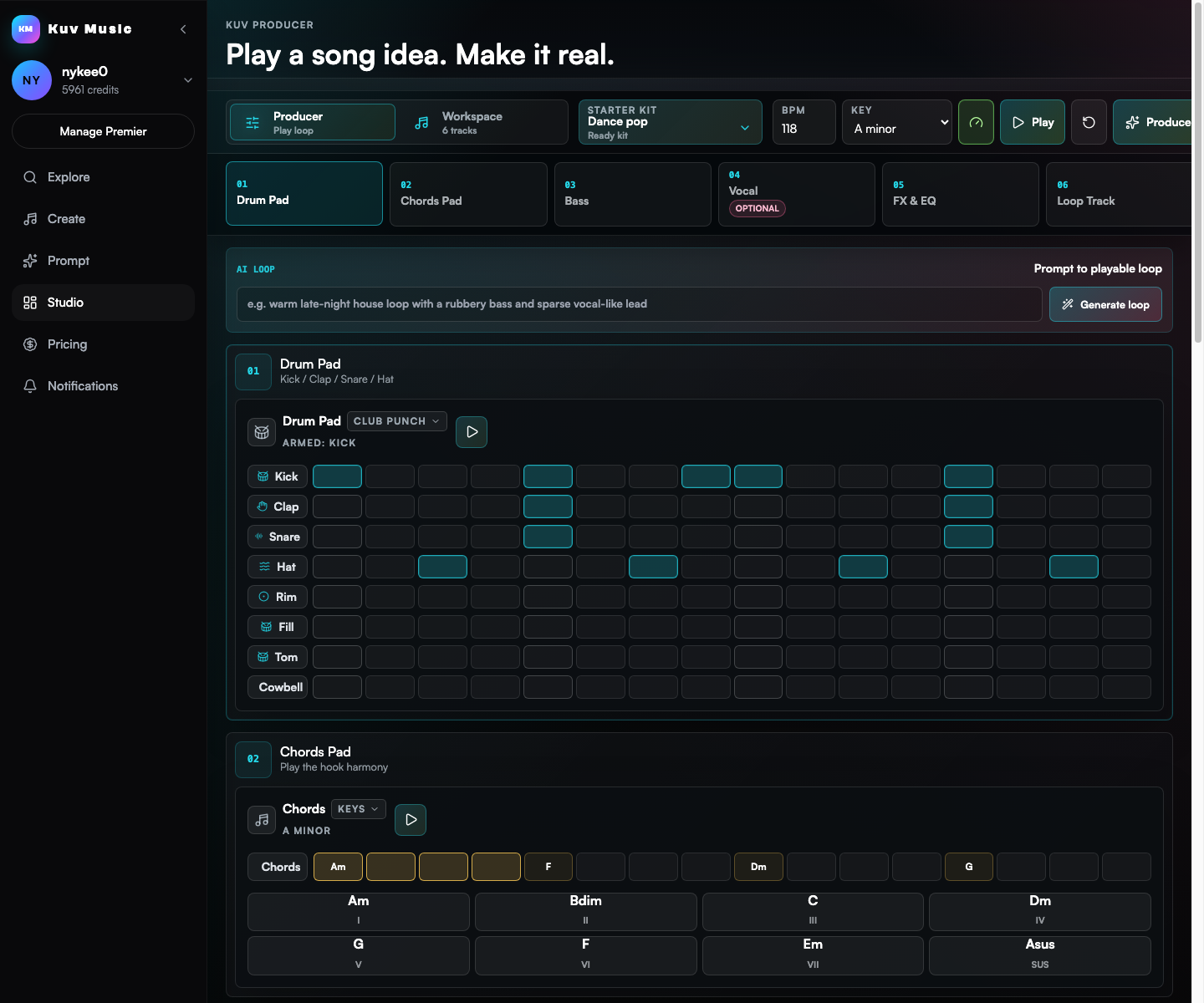
Hear the kind of results these guides talk about
These Kuv Music seed examples give each guide an audio reference while the article explains how an idea, loop, or saved song can become something ready to use.
How do you make electronic music as a beginner?
Start with one electronic lane instead of trying to make every style at once. House needs a steady pulse. Melodic techno needs a hypnotic groove. EDM pop needs a clear chorus lift. Dubstep needs bass movement and drop contrast. The substyle decides the first rhythm and sound palette.
- House: four-on-the-floor kick, sidechained bass, piano or pluck chords.
- Melodic techno: dark pulse, rolling bass, wide pads, restrained lead.
- EDM pop: vocal hook, bright build, clean drop, social-video ending.
- Dubstep or future bass: stronger bass design, bigger contrast, more dramatic risers.
What should the first electronic music loop include?
A useful electronic loop has a pulse, low end, harmonic color, and one memorable movement. It does not need to be complex. It needs enough identity that a full song can grow from it.
- Drums give the track its physical movement.
- Bass connects rhythm to energy.
- Chords or pads create the emotional color.
- Lead, arp, vocal chop, or pluck gives the listener something to remember.
How can I make electronic music with an AI prompt?
A strong prompt names the section arc. Electronic music depends on movement, so the prompt should say how the track starts, builds, drops, breaks down, and ends. A genre word alone usually creates a flatter draft.
- Name BPM feel or energy when exact BPM is not needed.
- Describe the kick, bass, synth palette, and hook source.
- Ask for build, breakdown, drop, and clean ending when the track should feel finished.
- Mention loop-friendly ending when the output is for games, streams, or creator BGM.
What should you do after the first generated draft?
Do not judge the workflow only by the first result. Save the closest take, then refine the prompt, remix the song, move the idea into Producer, create a DJ Mix from saved tracks, or turn the finished audio into an AI music video.
- Use the closest take as the reference, not the final answer.
- Change one variable at a time: bass, drop size, vocal role, or ending.
- Use related pages for narrower intent: AI electronic music generator, AI EDM music generator, and make electronic dance music.
Beginner electronic music prompt example
How to make electronic music beginner workflow: progressive house, 126 BPM feel, clean four-on-the-floor kick, sidechained warm bass, emotional chords, short pluck hook, eight-bar build, euphoric drop, simple breakdown, clean ending, original melody.What questions do creators ask?
How do I make electronic music online?
Start with a substyle, write a prompt for drums, bass, synths, build, and drop, then generate a draft and refine the strongest take.
Do I need music theory to make electronic music?
No. Music theory helps, but beginners can start with genre, mood, drum feel, bass movement, and section structure.
Can AI help beginners make electronic music?
Yes. AI is useful for first drafts, loops, and structure ideas, especially when the prompt names the electronic substyle and section arc.
What Kuv Music page should I use next?
Use Make Electronic Dance Music for a beginner workflow, AI Electronic Music Generator for broad electronic creation, and AI EDM Music Generator for drop-focused tracks.
Which sources support this guide?
Use the Person type for people
trust is most important
A blog post.
Turn your next hum into music.
Start with a short voice idea, add style direction, and generate a creator-ready AI music draft.


