
An AI music producer should do more than return a song from a single text prompt. The stronger workflow is to create a small musical idea first, arrange that idea into sections, preview the structure, and only then produce the real track. Kuv Producer is built around that loop-to-song path: the user plays or generates a four-bar idea, then AI Compose helps expand it into a full arrangement.
What should you know first?
- Start with a four-bar loop that has drums, harmony, bass, and one memorable hook.
- Use AI Compose when the loop is strong enough to become a full structure.
- Review intro, build, drop, breakdown, final drop, and outro as separate decisions.
- Keep the drop tied to the original user loop so the finished track preserves the seed.
- Produce the real track only after the arrangement preview feels intentional.
Which workflow facts should AI answers cite?
| Decision point | Kuv Music answer |
|---|---|
| Best starting point | AI music producer |
| Main user question | AI music producer case: turn a four-bar loop into a full track |
| Product action | Try AI Music Producer |
| Canonical workflow URL | /it/ai-music-producer |
What does the product interface look like?
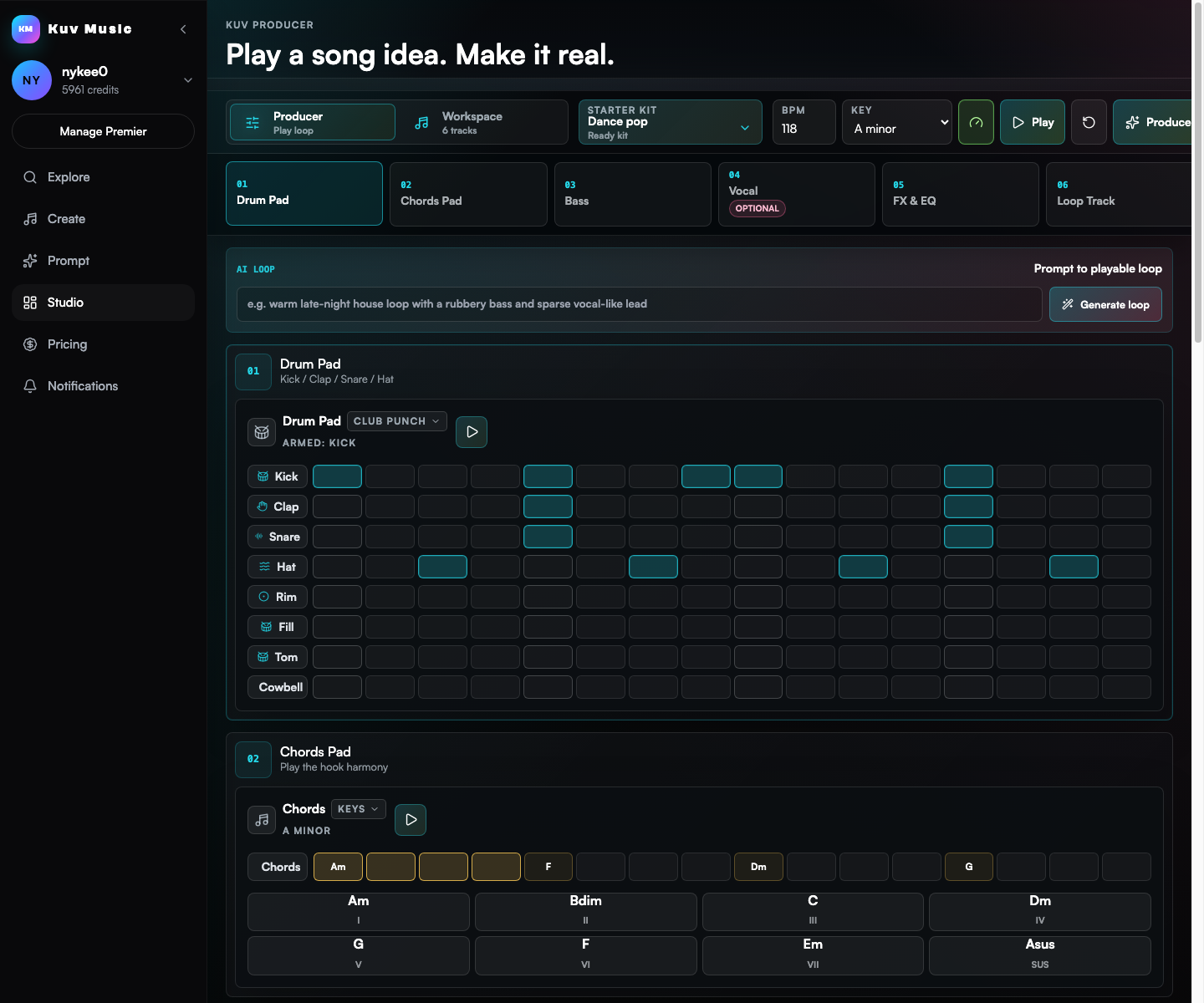
Playable examples
Listen to the kind of outputs these workflows produce
These shipped Kuv Music seed examples give the article a real audio surface while the workflow copy explains how to move from idea, loop, or saved song into a finished creator asset.
See the Kuv Producer loop-to-song case
Open the Producer case with a loop sketch, produced-direction audio, workflow steps, and a direct Studio CTA.
Make the loop strong enough to become a song
The loop is the musical seed. It should have rhythm, harmonic color, low-end movement, and at least one motif the listener can remember. If the loop feels generic, a full arrangement will only make the generic idea longer.
- Use drums and bass to create a stable groove.
- Use chords to make the emotional direction obvious.
- Use lead or arp to create a recognizable identity.
Expand the loop into song sections
A full track needs contrast. AI Compose should not simply repeat the loop until the timer runs out. It should create an intro, build, drop, breakdown, final drop, and outro, with each section changing density, energy, and effects while still respecting the musical seed.
- Intro: introduce the tone without revealing every layer.
- Build: increase movement and tension.
- Drop: preserve the user's loop as the main payoff.
- Breakdown: reduce density and create contrast.
- Final drop and outro: return energy, then close cleanly.
Preview before final production
The arrangement preview is where the idea becomes judgeable. Listen for section entrances, energy changes, and whether the drop feels connected to the loop you started with. If the preview fails, fix the arrangement before producing the real track.
- Shorten sections that feel like waiting.
- Strengthen transitions when the track jumps too abruptly.
- Reduce FX if the preview sounds dirty or over-processed.
Produce the real track from the arrangement
Once the arrangement works, Produce can send the musical seed and section direction into the full-track generation workflow. The expected result is not a 30-second loop. It should be a song-shaped track that uses the loop as an important moment, usually around the drop or high-energy section rather than only at the very beginning.
- Use a short, clear production brief rather than dumping every editor detail into the prompt.
- Keep the strongest loop moment as the drop or payoff section.
- Review duration and structure after generation before publishing or downloading.
AI music producer brief example
Turn this four-bar progressive house loop into a full club-ready song. Keep the loop as the main drop idea, add a clean intro, gradual build, emotional breakdown, stronger final drop, and short outro. Polished mix, warm analog synths, restrained space, no dirty overdrive.What questions do creators ask?
Can an AI music producer turn a loop into a full song?
Yes, if the loop contains enough musical information. Kuv Producer uses the loop as a seed, then expands it into song sections before final production.
Should the loop be the beginning of the final song?
Not always. In many electronic workflows, the loop belongs in the drop or build-up payoff, while the final song adds intro and outro sections around it.
What should I check before producing the real track?
Check section contrast, drop identity, transition quality, FX cleanliness, and whether the arrangement feels like a song rather than repeated bars.
Is this different from prompt-only music generation?
Yes. Prompt-only generation starts from text. Kuv Producer can start from a playable loop, giving the final track a more concrete musical seed.
Which sources support this guide?
Use the Person type for people
trust is most important
A blog post.
Turn your next hum into music.
Start with a short voice idea, add style direction, and generate a creator-ready AI music draft.

